
+28,000 Smiles and Counting — Istanbul 🇹🇷 | London 🇬🇧

Immediate Implants in 2026: When Same-Day Teeth Are Clinically Safe
The idea of immediate implants on the same day it is extracted has transformed patient expectations in modern dentistry. Immediate implants often referred to as same-day teeth—offer faster treatment timelines and immediate function. However, in 2026, clinical success is no longer measured by speed alone. It is measured by biological stability, risk management, and long-term predictability.
Immediate implant placement is not a shortcut. When used correctly, it is a medically sound protocol supported by clear clinical criteria. When used indiscriminately, it carries avoidable risks. Understanding when immediate implants are clinically safe is essential for informed decision-making.
What Are Immediate Dental Implants?
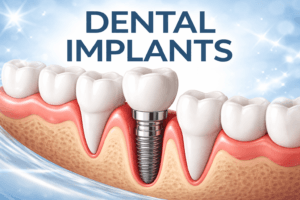
Immediate dental implants involve placing a dental implant directly into the extraction socket at the same appointment when a tooth is removed. In many cases, a temporary crown or provisional restoration is also placed on the same day.
This approach differs from traditional implant protocols, which typically require:
Tooth extraction
A healing period of several months
Implant placement after bone recovery
Immediate implants compress this timeline—but only when specific biological conditions are met.
Immediate Placement vs Immediate Loading: A Critical Distinction
In 2026, clinicians clearly separate two concepts that patients often confuse:
Immediate implant placement: The implant is placed immediately after extraction
Immediate loading: A temporary tooth is attached immediately
An implant can be placed immediately without being loaded. Immediate loading is optional and only safe when implant stability is sufficient. Conflating these two steps is one of the most common sources of implant failure.
When Are Immediate Implants Clinically Safe?
Immediate implants are considered safe when biological, mechanical, and anatomical criteria align. These criteria are non-negotiable.
1. Adequate Bone Quality and Volume
The extraction socket must provide enough surrounding bone to stabilize the implant. Primary stability—mechanical anchorage at placement—is the foundation of success.
Immediate implants are safest when:
Bone density is moderate to high
The socket walls are intact
No active bone loss is present
If bone defects exist, immediate placement may require grafting—or may be contraindicated altogether.
2. Absence of Active Infection
Contrary to outdated beliefs, not all infected teeth disqualify immediate implants. However, active, uncontrolled infection significantly increases failure risk.
Immediate placement may be considered if:
Infection is localized
Thorough debridement is possible
Surrounding bone remains healthy
Chronic abscesses, extensive bone destruction, or uncontrolled periodontal disease are strong reasons to delay implant placement.
3. Achievable Primary Stability
In 2026, implant stability is no longer guessed—it is measured. Tools such as insertion torque values and resonance frequency analysis help determine whether immediate loading is safe.
As a general rule:
Immediate loading requires higher stability
Immediate placement alone has a wider safety margin
If stability thresholds are not met, the implant should heal unloaded.
4. Controlled Bite Forces
Immediate temporary teeth must be designed to avoid functional load. This means:
No contact during chewing
No lateral forces
Strict bite adjustment
Same-day teeth are provisional by design. Their role is to protect the implant during integration—not to function like a final crown.
When Immediate Implants Are Not Recommended
Immediate implants are not appropriate in every case. Delayed protocols remain the safer option when:
Bone volume is insufficient
Soft tissue architecture is compromised
The patient has uncontrolled systemic conditions
Smoking significantly impairs healing
Bruxism creates excessive early load
In these cases, patience improves predictability. Speed should never override biology.
Advances in Immediate Implant Protocols by 2026
Technological progress has made immediate implants safer—but not universal.
CBCT-Based Risk Mapping
Three-dimensional imaging allows clinicians to assess:
Socket anatomy
Bone density distribution
Proximity to nerves and sinuses
This reduces placement error and improves case selection.
Surface-Optimized Implants
Modern implant surfaces promote faster bone integration, increasing stability during the critical early healing phase. This has expanded—but not eliminated—the indications for immediate placement.
Digital Surgical Planning
Guided implant placement reduces deviation and improves accuracy, particularly in esthetic zones where millimeters matter.
Immediate Implants vs Delayed Implants: A Clinical Comparison
| Factor | Immediate Implant | Delayed Implant |
|---|---|---|
| Treatment time | Shorter | Longer |
| Bone preservation | Often better | May require grafting |
| Risk sensitivity | Higher | Lower |
| Case selection | Strict | More flexible |
| Predictability | High in ideal cases | High in most cases |
Both protocols are valid. The correct choice depends on clinical conditions, not patient preference alone.
Patient Experience and Expectations
For patients, immediate implants offer psychological and functional benefits:
No prolonged gap after extraction
Faster aesthetic recovery
Reduced total treatment time
However, patients must understand that same-day teeth are temporary. Final restorations are placed only after confirmed bone integration.
Compliance with post-operative instructions is critical to success.
Regulatory and Safety Considerations
Dental implants and surgical protocols follow international medical device regulations and clinical safety standards established by organizations such as the U.S. Food and Drug Administration and European medical authorities. Immediate implant protocols are considered safe when applied within approved indications.
Final Medical Perspective: Speed With Structure
Immediate implants are not about convenience. They are about controlled timing.
In 2026, same-day teeth are clinically safe only when bone quality, implant stability, infection control, and bite management align. When these conditions are respected, immediate implants can preserve anatomy, shorten treatment, and deliver stable long-term outcomes.
When they are ignored, delaying treatment is not a compromise—it is the medically responsible choice.
Take the Next Step With Professional Guidance
If you are considering immediate implants or same-day teeth, proper evaluation is essential. Not every case qualifies—and that distinction protects your long-term oral health.
Fill out the consultation form on our website for a professional case assessment
Or contact us directly via WhatsApp for fast guidance, image review, and treatment planning
👉 Same-day teeth should be based on biology, not urgency.
Reach out today to determine whether immediate implant placement is clinically safe for your case.