










YOUR TREATMENT GUIDE
Make Sense of Your Crown Options
A crown proposal should begin with the tooth being treated and the reason it needs a restoration. From there, you can compare the material, appearance, preparation and fitting stages with a clearer understanding of what the work is intended to achieve.
01
The tooth beneath
Ask what the examination shows about the existing tooth and how that affects the recommendation.
02
The material choice
Review the exact material and construction, rather than relying on a broad ceramic or porcelain label.
03
The finished fit
Discuss appearance, bite, cleaning and review arrangements alongside the laboratory specification.
What Is a Dental Crown?
A crown covers a tooth and may be used to restore a damaged or weakened tooth. Crowns are also used on implants. A crown on a natural tooth and an implant-supported crown involve different circumstances, so ask the dentist to identify which is being proposed.
Understand Why a Crown Is Being Recommended
Ask what problem the restoration is intended to address, what the assessment found and which alternatives deserve discussion. The purpose of treatment should be clear before you move on to shade, material or travel arrangements.
Emax Porcelain and Monolithic Zirconia
Medico Clinic lists Emax porcelain and Monolithic Zirconia within its crown and veneer offering. Ask which material is being recommended and why it is suitable for the tooth or restoration under discussion.
A useful material discussion separates appearance, the condition of the tooth and the planned restoration. Ask for the selected material and the laboratory stage to be identified in the written proposal.
Preparation and the Laboratory Stage
A natural tooth may need shaping before a crown is fitted, and a temporary restoration may be used while the final crown is made. Ask the clinician what preparation is intended and what each stage will involve.
Digital Planning at Medico Clinic
The clinic has a 3Shape TRIOS 5 intraoral scanner and an in-house CAD/CAM laboratory using Redon CAD/CAM and Straumann n!ce Zirconia. Ask which parts of the proposed crown treatment use these resources.
How Much Do Dental Crowns Cost in Turkey?
Ask for a written quotation that describes the proposed treatment rather than comparing a price without its scope. The document should identify the work included, the materials or implant systems where relevant, investigations, temporary and final stages, the proposed visits and the aftercare arrangements.
Separate treatment costs from travel, accommodation and transfers. Ask which services are included, which are optional and what happens if the examination changes the plan. A lower headline amount is not enough to establish that two quotations cover the same care.
How Many Visits and How Long in Istanbul?
Discuss the clinical sequence before making travel commitments. Ask which stages happen on the first visit, what must be reviewed before a later stage and what would happen if the schedule needs to change.
Your plan should distinguish appointment time from the total stay and identify any later visit. Request a clear explanation of the assumptions behind the proposed dates. The general six-step journey is a guide to coordination, not a fixed clinical timetable.
Crowns as Part of a Wider Smile Plan
If several crowns are being proposed, ask for the reasons tooth by tooth. Clarify which teeth need restoration, whether another treatment is being discussed and how the stages are coordinated.
A smile makeover label is not a substitute for that explanation. Use the consultation to review the individual proposal and the written terms before committing to a treatment plan.
Aftercare, Records and Written Terms
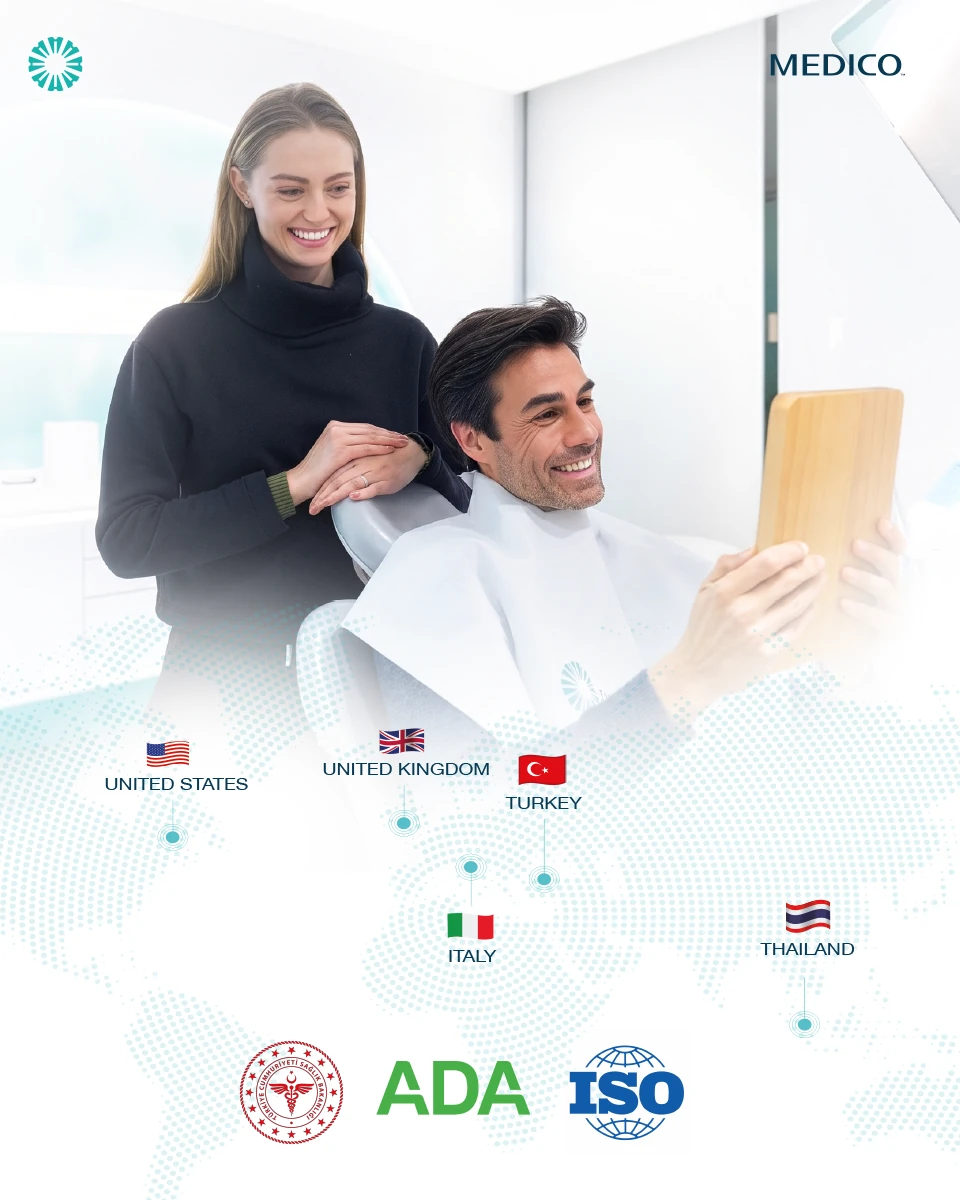
Ask which checks are planned before you leave Istanbul, which records you will receive and whom you should contact after travelling home. Medico Clinic has active aftercare partners in London and Pennsylvania. Confirm whether a named partner is relevant to your case and how appointments will be arranged.
Discuss the difference between planned follow-up, unexpected problems and any written warranty. The location of a partner does not establish free or unlimited services. Keep a copy of the agreed plan and ask for any unclear responsibilities or costs to be explained.
The Team Involved in Your Treatment
Visit the doctors hub to see the named members of the Medico Clinic team. Ask who will assess your case, perform each stage and coordinate your follow-up.
Understand the Tooth Beneath the Crown
The crown is one part of a proposed restoration. Ask the dentist to explain the condition of the tooth being covered and whether any preparatory treatment is needed. This helps connect the visible result to the reason for the procedure.
If you have been offered several crowns, request the explanation for each tooth. A wider appearance goal should not make the individual clinical reasons difficult to identify. Ask which alternatives deserve consideration and how the options compare.
Replacing an Older Crown
Explain what prompted you to seek advice about an existing crown. You may want to discuss its appearance, a change you have noticed or information from another dentist. The assessment should establish what is known before a replacement plan is confirmed.
Ask what would happen if the findings change the proposed work. Your written quotation should identify any provisional items and the process for agreeing a revised plan. A replacement crown should not be treated as a fixed-price label without understanding the tooth involved.
A Crown on a Tooth and a Crown on an Implant
Ask which support is involved in your proposal. A crown on an existing tooth and a crown forming part of an implant restoration need different information in the treatment record. The written description should make the support and relevant components clear.
For an implant-based proposal, ask for the implant system and connecting component details alongside the crown specification. For a natural-tooth restoration, ask what preparatory work and review are planned. The material name does not answer those questions by itself.
Know the Decisions at the Laboratory and Fitting Stages
Clarify how the clinician will discuss the specification with the laboratory and when your questions about appearance will be addressed. The clinic’s in-house laboratory is a resource, while the exact process and appointments should be explained for your own treatment.
At completion, request the care instructions and planned reviews relevant to the restoration. Ask whom to contact if you need an assessment after returning home and what an aftercare partner has agreed to provide.
Frequently Asked Questions
Are Emax and zirconia the same material?
They are different material options named in the clinic information. Ask which one is proposed, the restoration type and the clinician’s reasons for the recommendation.
Is a crown different from a veneer?
Yes. A crown covers more of a tooth than a veneer. Your clinician should explain the purpose and preparation of the proposed restoration.
Can crowns be included in a smile makeover?
Crowns are part of Medico Clinic’s treatment offering. Their use in an individual makeover should be justified by the assessment and explained tooth by tooth.
How much is a crown at Medico Clinic?
Request a free consultation to receive a quotation for your own plan. Ask for an itemised quotation specifying the restoration, material and included stages.
Will follow-up be available after I return home?
Discuss the applicable aftercare arrangement, including any partner appointment route and fees, before travelling.
Your Six-Step Journey With Medico Clinic
- Online Consultation Begin with a free video call and case review. Share what you would like to discuss and ask how the assessment will work.
- Arrival & Transfer Your journey includes coordination of arrival, VIP airport pickup and hotel arrangements. Confirm the exact services and inclusions in your written plan before booking.
- Treatment in Istanbul Attend the flagship clinic for your agreed treatment, supported by the clinic’s dental team, named technology and treatment records.
- Post-Op Check-Up Complete the planned checks, X-rays and adjustments, with clinical sign-off before the next stage of your journey.
- Fly Home Confident Your treatment records are shared with the aftercare partner as part of the coordinated handover, through the approved consent and transfer process.
- Local Aftercare Follow-up can be coordinated with the active aftercare partners in London and Pennsylvania. Confirm the scope, appointment process and any costs for your plan.
Three Crown Situations to Discuss
| Decision | What to clarify | Why it matters |
|---|---|---|
| A damaged natural tooth | The reason for coverage and any suitable alternatives. | The restoration should address a defined need. |
| An existing crown | The reason for replacement and what can be assessed before removal. | An older crown may conceal findings that change the plan. |
| An implant crown | The implant connection and the visible crown specification. | These are different components of the completed replacement. |
Before You Leave With Your Restoration
- Keep the treated tooth numbers, exact restoration type and material specification with your records.
- Ask the dentist to demonstrate the cleaning routine for your own crown, bridge or veneers.
- Confirm the contact for a bite concern, a damaged restoration or a question about sensitivity.
- Record the agreed review arrangements and written repair or replacement terms, including any exclusions.
Sources and Further Reading
General information to help you prepare for a dental consultation. Your diagnosis, options and treatment plan require an individual clinical assessment.