
+28,000 Smiles and Counting — Istanbul 🇹🇷 | London 🇬🇧

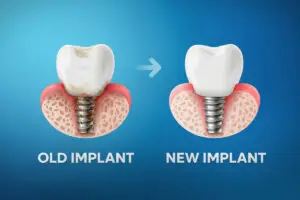
Can Old Implants Be Replaced? Revision Implant Surgery Explained
Dental implants are designed to be long-term solutions, often lasting decades when properly placed and maintained. However, implants are not indestructible. Over time, complications such as bone loss, infection, mechanical fracture, or poor initial placement can lead to failure. When this happens, many patients ask an important question: can old implants be replaced?
In 2026, revision implant surgery is a highly developed field. In most cases, failed or problematic implants can be removed and replaced safely—but the process requires careful planning, bone evaluation, and sometimes staged treatment.
What Is Revision Implant Surgery?
Revision implant surgery refers to the removal of a failed or compromised dental implant followed by corrective treatment and, when appropriate, placement of a new implant.
Unlike primary implant surgery, revision procedures must address existing damage. This may include:
Bone loss around the implant
Infection (peri-implantitis)
Improper implant positioning
Fractured implant components
Because of these additional factors, revision surgery is typically more complex than initial placement.
Why Do Dental Implants Fail Over Time?
Implant failure can occur for several reasons. Early failures often result from lack of osseointegration, meaning the bone never properly bonded to the implant. Late failures typically involve peri-implantitis, a bacterial infection that causes progressive bone loss around the implant.
Other causes include excessive bite forces, poorly designed prosthetics, or implants placed at incorrect angles. Even older implant systems that are no longer supported by manufacturers may create long-term maintenance challenges.
Understanding the reason for failure is the first step toward successful replacement.
Can a Failed Implant Always Be Replaced?
In most cases, yes—but not immediately and not without preparation.
The ability to replace an implant depends on several factors, including remaining bone volume, the presence of infection, and overall health conditions. If bone loss is significant, regeneration procedures may be necessary before placing a new implant.
Replacement is usually possible, but it must be done strategically.
Step 1: Safe Removal of the Old Implant
Removing a failed implant requires precision. Modern techniques allow for minimally traumatic removal, preserving as much surrounding bone as possible.
Specialized tools disengage the implant without excessive bone damage. The goal is to maintain the integrity of the site to prepare for future reconstruction.
In some cases, removal and bone grafting occur in the same appointment. In others, staged healing is recommended.
Step 2: Managing Bone Loss
One of the biggest challenges in revision surgery is bone deficiency. When implants fail due to infection, bone around them may be compromised.
Bone grafting procedures help rebuild the area and restore structural support. Depending on the extent of damage, healing may take several months before a new implant can be placed safely.
Advanced graft materials and regenerative techniques in 2026 significantly improve predictability compared to older methods.
Step 3: Planning the New Implant
Revision implant placement requires comprehensive 3D imaging and digital planning. CBCT scans allow clinicians to assess:
Remaining bone thickness
Nerve proximity
Sinus involvement
Bite dynamics
Correcting previous positioning errors is essential to prevent repeat failure.
Implant systems used today follow strict regulatory standards overseen by organizations such as the U.S. Food and Drug Administration, ensuring material reliability. However, surgical accuracy remains equally important.
Is Revision Surgery More Painful?
Patients often worry that revision surgery will be more uncomfortable than the original procedure. In reality, with proper anesthesia and modern techniques, discomfort is typically manageable.
Recovery may be slightly longer if grafting is required, but pain is generally comparable to standard implant surgery.
Clear post-operative instructions and follow-up visits are essential to protect healing.
When Replacement May Not Be Recommended
In rare situations, implant replacement may not be advisable. Severe systemic health issues, uncontrolled infection, or extreme bone loss may limit surgical options.
In such cases, alternative solutions such as implant-supported bridges in different positions or advanced full-arch approaches may be considered.
The goal is always long-term stability, not repeating a failing approach.
Can Multiple Failed Implants Be Replaced?
Yes, but treatment becomes more complex. Full-arch cases involving multiple failing implants often require complete reassessment. Sometimes removing all failing implants and redesigning the prosthesis provides better long-term outcomes than attempting partial corrections.
Each case must be evaluated individually.
Long-Term Success After Revision
Revision implants can achieve excellent success rates when:
Infection is fully controlled
Bone is properly regenerated
Bite forces are balanced
Maintenance protocols are followed
In fact, many revision cases succeed long-term when previous planning mistakes are corrected.
How to Prevent Repeat Failure
Preventing repeat complications requires addressing the original cause. This may involve improving oral hygiene, adjusting bite alignment, changing prosthetic design, or selecting a different implant system.
Regular follow-up and professional maintenance significantly reduce the risk of future problems.
Final Perspective: Replacement Is Possible, But Planning Is Critical
Old or failed implants do not automatically mean permanent damage. In most cases, revision implant surgery can restore function and stability successfully. However, replacement must be approached with careful diagnostics, biological respect, and strategic planning.
Rushing replacement without correcting the underlying issue increases the chance of repeated failure.
Successful revision is not about replacing metal—it is about restoring structure and balance.
Concerned About an Old or Failing Implant?
If you are experiencing discomfort, mobility, or bone loss around an existing implant, early evaluation is essential.
At Medico Clinic, we use advanced 3D imaging and comprehensive diagnostics to assess failed implants and design safe revision strategies.
You can fill out the consultation form on our website for a detailed implant evaluation, or contact us directly via WhatsApp to share your X-rays and receive expert guidance.
A failing implant does not mean the end of your smile.
With the right plan, it can be restored safely and predictably