
Istanbul 🇹🇷 | London 🇬🇧 | USA 🇺🇸| Bangkok 🇹🇭


Enhanced Stability and Strength with All-on-6 Dental Implants
All-on-6 dental implants are an advanced full-arch restoration solution that uses six dental implants to support a complete fixed set of teeth. This technique provides increased stability, improved load distribution, and long-term durability—making it an excellent option for patients seeking a strong and reliable full-mouth implant solution.
More Affordable
0
%
Years Of Lasting Results
0
+





Overview and Key Benefits of All-on-6
All-on-6 dental implants are chosen at a very specific moment in a patient’s journey — the moment when tooth loss is advanced, bone conditions vary across the jaw, and long-term durability becomes the central concern. Patients arriving at this solution are rarely looking for speed or minimal intervention. Instead, they are seeking certainty, the reassurance that the teeth they receive now will continue to function reliably years into the future.
At Medico Clinic, All-on-6 is approached as a full-arch structural rehabilitation, not a cosmetic enhancement. It is designed for patients whose oral condition demands additional implant support to distribute forces more evenly, protect bone over time, and provide the highest level of mechanical security possible.
The Long Dental History That Often Leads to All-on-6
Most All-on-6 patients share a similar background, even if their stories differ in detail. Years of dental treatment, repeated restorations, periodontal disease, or long-term denture use gradually change the landscape of the mouth. Bone loss becomes uneven. Some areas remain dense and supportive, while others weaken significantly. Bite forces increase as chewing patterns adapt unconsciously to missing teeth.
This uneven foundation is where All-on-6 becomes relevant. Unlike solutions that aim to work around bone loss, All-on-6 addresses it directly by spreading load across a wider implant base, reducing stress on individual implants and supporting long-term stability.
For many patients, this is not about replacing teeth — it is about ending a long cycle of dental compromise.
Understanding the Medical Logic Behind Six Implants
The difference between All-on-4 and All-on-6 is not numerical; it is biomechanical. All-on-6 uses six implants to support a full arch, allowing forces to be distributed more evenly across the jawbone. This distribution becomes particularly important in patients with stronger bite forces, uneven bone density, or a history of grinding or clenching.
Six implants create shorter spans between support points, reducing flexion in the prosthetic arch and decreasing long-term stress on both implants and bone. This structural advantage contributes to durability, especially in younger patients or those seeking a solution intended to last decades.
All-on-6 is not excessive. It is preventive reinforcement.
Bone Quality and Why It Dictates the Treatment Choice
Bone quality is not uniform throughout the jaw. Even within the same patient, density can vary dramatically from front to back or side to side. While All-on-4 is designed to work effectively in reduced bone situations, some patients present with bone patterns that benefit from additional implant anchorage.
All-on-6 takes advantage of available bone across a wider area, maximizing contact and integration. This approach reduces reliance on angled implants alone and allows for more vertical placement when anatomy permits.
At Medico Clinic, this decision is made after detailed imaging and analysis — never by default.
Table: When All-on-6 Is Medically Preferred
| Clinical Factor | All-on-4 | All-on-6 |
|---|---|---|
| Uneven bone density | ⚠ Possible | ✔ Preferred |
| Strong bite forces | ⚠ Case-dependent | ✔ Ideal |
| History of grinding | ⚠ | ✔ |
| Younger patient seeking longevity | ⚠ | ✔✔ |
| Maximum load distribution | ❌ | ✔✔ |
This table highlights that All-on-6 is selected when long-term mechanical security outweighs the need for minimal intervention.
Emotional Security and the Need for Confidence in Permanence
Patients choosing All-on-6 often express a different emotional need than those selecting All-on-4. Rather than asking whether the teeth will look natural, they ask whether they will last. Many have lived through failed treatments and are no longer willing to accept uncertainty.
All-on-6 offers psychological reassurance by increasing redundancy. If one implant is compromised years later, the system remains stable. This added margin of safety is deeply reassuring for patients who have experienced dental instability in the past.
Surgical Planning: Designing for Load, Not Just Placement
All-on-6 surgery is planned with prosthetic outcome as the primary guide. Implant positions are selected to support the final arch evenly, protect bone, and minimize cantilever forces.
The surgical plan considers:
Bone density distribution
Jaw shape and width
Bite dynamics
Future prosthetic maintenance
This planning ensures implants are not merely placed successfully, but placed intelligently.
Tooth Removal and Immediate Functional Continuity
In many All-on-6 cases, remaining failing teeth are removed during the same procedure. This allows implants to be placed into fresh extraction sites where bone stimulation is optimal.
Temporary fixed teeth are often placed shortly after surgery, providing continuity of function and appearance. These provisional restorations are designed to protect implants during healing while allowing patients to resume daily life with confidence.
Table: Temporary vs Final All-on-6 Prosthesis
| Aspect | Temporary Teeth | Final Prosthesis |
|---|---|---|
| Purpose | Healing & adaptation | Long-term function |
| Material | Lightweight acrylic | Reinforced ceramic/composite |
| Bite load | Controlled | Full |
| Aesthetic refinement | Moderate | High |
| Longevity | Months | Years |
This staged approach respects biology while maintaining quality of life.
Healing, Osseointegration, and Why Stability Takes Time
Osseointegration is the biological process through which implants become part of the jawbone. With six implants, forces are distributed more gently during healing, reducing stress at any single integration site.
Patients are guided through this phase carefully, with clear instructions designed to protect healing while maintaining comfort. This patience is not a delay — it is an investment in longevity.
All-on-6 vs All-on-4: Not Competition, but Indication
Patients often ask which system is “better.” The medically correct answer is that neither is universally superior. Each exists for a specific indication.
All-on-4 prioritizes efficiency and minimal intervention. All-on-6 prioritizes maximum stability and redundancy. The correct choice depends on anatomy, bite force, age, and long-term goals.
Living With All-on-6 Implants
Once final teeth are placed, All-on-6 implants function like natural teeth. Patients regain chewing efficiency, facial support, and speech clarity without the instability associated with dentures.
Daily hygiene and routine follow-ups protect the investment and ensure continued health.
Longevity and Long-Term Outlook
All-on-6 systems are designed for durability. With proper care and maintenance, they can provide stable function for many years.
Longevity depends on:
Implant integration
Prosthetic design
Patient hygiene
Professional monitoring
At Medico Clinic, longevity is planned, not hoped for.
All-on-6 for International Patients
For international patients, All-on-6 offers peace of mind. Although the procedure is more comprehensive, treatment timelines can be structured efficiently without compromising safety.
Clear communication and detailed aftercare planning allow patients to return home with confidence.
Ethical Responsibility in Full-Arch Implant Decisions
Not every patient needs All-on-6. Ethical dentistry involves resisting unnecessary intervention while recognizing when additional support is medically justified.
At Medico Clinic, All-on-6 is recommended only when it clearly enhances long-term outcomes.
Final Medical Perspective: All-on-6 as Structural Assurance
All-on-6 dental implants represent commitment to permanence. They are chosen when patients and clinicians agree that maximum stability, even force distribution, and future resilience are the priorities.
For patients who want to close the chapter on dental uncertainty once and for all, All-on-6 provides a foundation that feels as secure as it looks.
Book your consultation today to determine whether All-on-6 dental implants are the medically appropriate solution for restoring long-term stability at Medico Clinic.
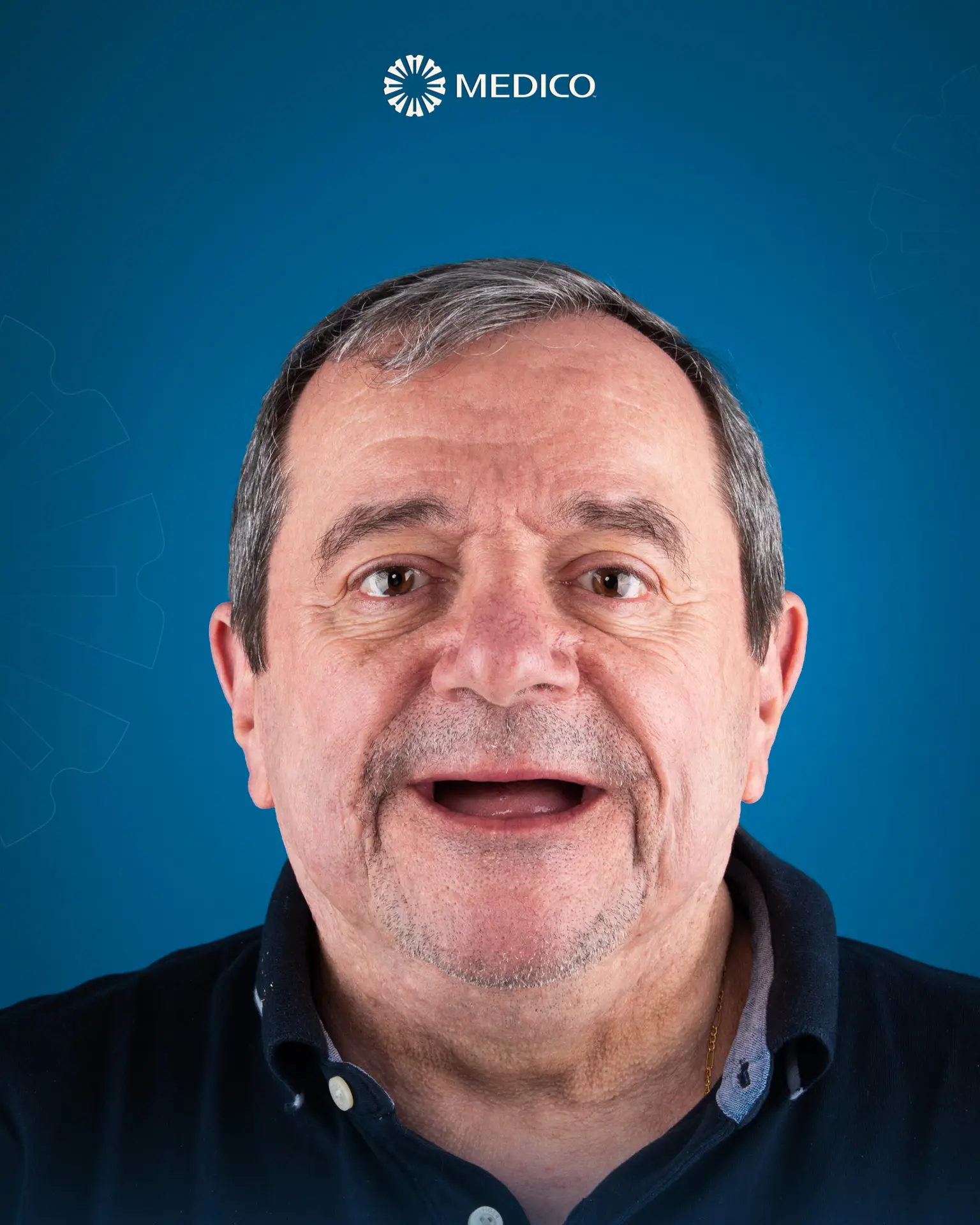
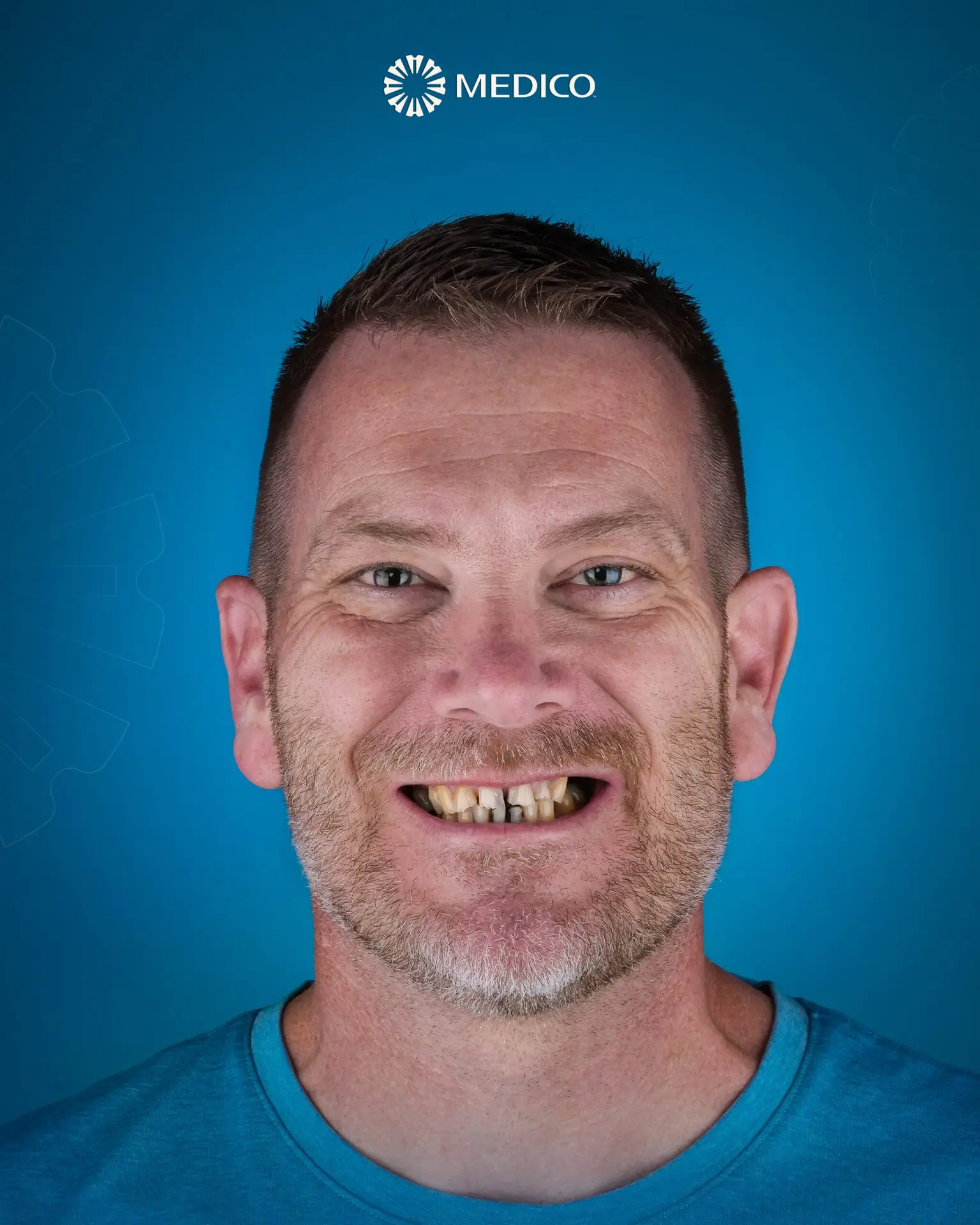
SEE THE TRANSFORMATION
Stunning results that showcase the life changing impact




PATIENT JOURNEY
Your Journey with Medico Clinic
Embark on a carefully crafted journey where your comfort, safety, and satisfaction come first. From a detailed online consultation to personalized treatment and dedicated post-care, every step with Medico Clinic is designed to provide a world-class experience.

#1 -Online Consultation
Begin your journey with a detailed online consultation from the comfort of your home. Our dedicated team of multilingual medical consultants is here to assist you to ensure that language is never a barrier to understanding your unique needs.

#2- Arrival and Transfer
Upon arrival in Türkiye, experience a warm welcome from our professional team, who will assist you with a smooth, secure transfer to your accommodation. Choose from a selection of luxurious hotels carefully curated to provide you with the comfort and relaxation you deserve.

#3- Accommodation
Your accommodation has been selected with your comfort in mind, providing a serene and sophisticated environment for your stay. Each hotel is equipped with amenities designed to make you feel at ease, allowing you to relax and rejuvenate.

#4 - Clinical Consultation
Our dentists take the time to understand your specific goals, reviewing every detail of your customized treatment plan. With a deep commitment to precision and care, they are here to answer any remaining questions and ensure you are fully prepared and comfortable with the next steps.

#5 - The Procedure
Your treatment is conducted by highly skilled surgeons and medical professionals who use the latest technology and advanced surgical techniques to ensure optimal results.

#6 - Check-Up
Following your treatment, our team performs a thorough post-procedure check-up to ensure your comfort and satisfaction. Our experienced doctors carefully monitor your progress and address any questions or concerns.

#7- Departure
As your journey concludes, depart with a renewed sense of confidence, knowing your experience was led by professionals who prioritize your care and comfort at every step. From your initial consultation to your final check-up, Medico Clinic is committed to delivering a seamless, exceptional experience.
Contact US
Get Your FREE Dental Report
Submit your info and get a quote personalized to your needs.
FAQS
Everything you need to know about All-on-6
Find quick answers to common questions about our dental implants, procedures, and patient care in our FAQ section.
No. They are fixed restorations and can only be removed by a dentist.
In some cases, but many patients have sufficient bone for All-on-6 without grafting.
The procedure is performed under anesthesia, and post-treatment discomfort is typically manageable.
Yes. It can be performed on the upper jaw, lower jaw, or both.