Porcelain Crowns After Root Canal Treatment
Teeth that undergo root canal treatment lose internal blood supply and hydration, making them more brittle over time. While the pain may be resolved, the tooth becomes structurally vulnerable.
Porcelain crowns play a critical role in these cases by reinforcing the remaining tooth and preventing vertical fracture, which often leads to tooth loss. Delaying crown placement after a root canal significantly increases the risk of failure.
This is one of the most common and medically justified indications for porcelain crowns.
The Role of Porcelain in Natural Aesthetics
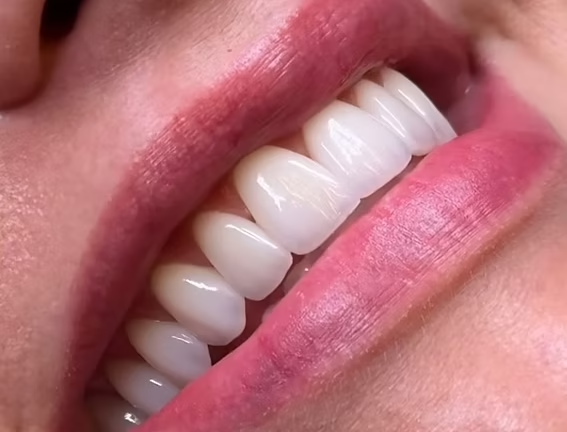
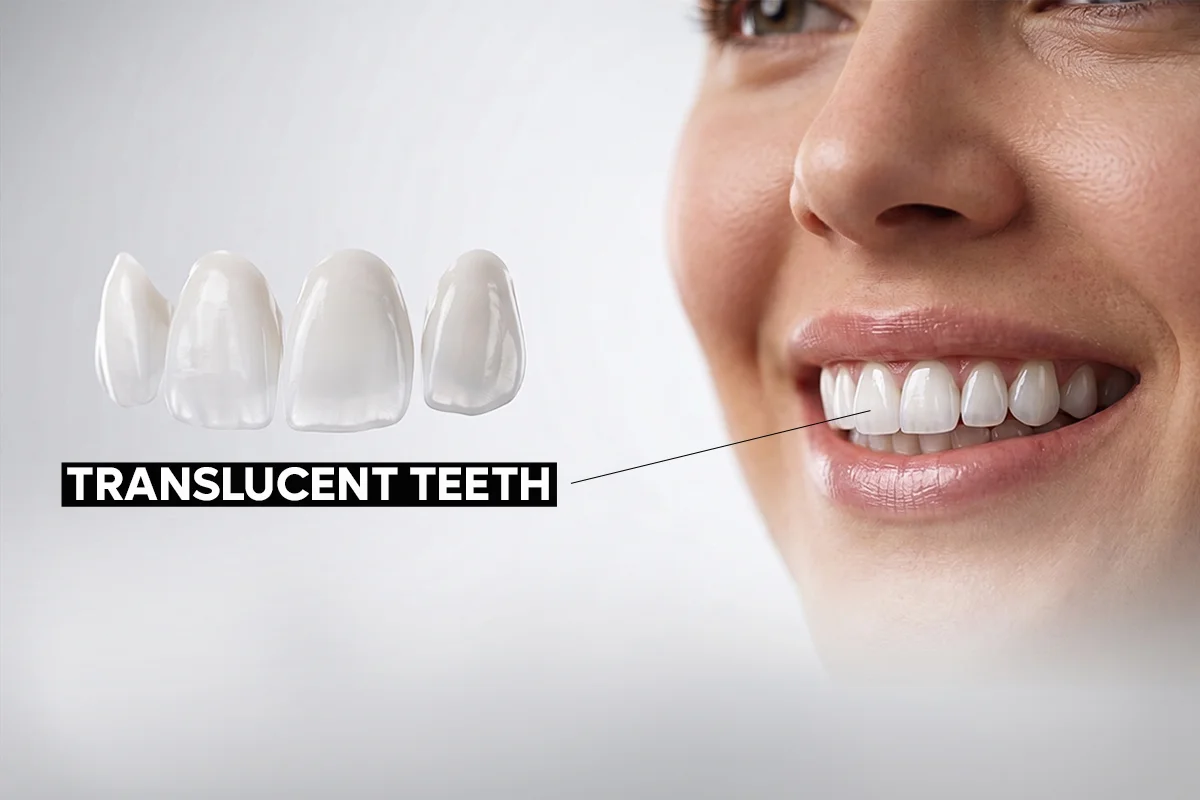
Porcelain has been used in dentistry for decades because of its ability to mimic natural enamel. When layered correctly, it reflects and transmits light in a way that blends seamlessly with adjacent teeth.
Unlike opaque materials, porcelain can be customized for:
- Subtle color gradients
- Translucent incisal edges
- Natural surface texture
This allows crowns to restore not just function, but visual continuity within the smile.
Dental Laboratory Craftsmanship: Where Medicine Becomes Precision
Once preparation is complete, the success of a porcelain crown depends heavily on laboratory execution. Dental technicians reconstruct anatomy based on impressions or digital scans, translating clinical data into a functional restoration.
They consider:
- Occlusal anatomy for chewing efficiency
- Contact points to prevent food impaction
- Cervical margins for gum health
- Color layering for realism
A porcelain crown is not manufactured; it is built with medical intent.
Patient Storytelling: The Moment of Trust
Many patients approach crown treatment with hesitation, worried that the tooth will feel artificial or noticeable. This concern often fades during the provisional phase, when temporary crowns allow patients to experience restored function.
There is usually a moment — often during eating or speaking — when the patient realizes the tooth no longer feels fragile. This sense of stability creates trust, not just in the restoration, but in the decision itself.
Porcelain crowns succeed when patients stop protecting the tooth subconsciously.
Table: Porcelain Crowns vs E-Max vs Zirconium (Clinical View)
| Feature |
Porcelain Crowns |
E-Max Crowns |
Zirconium Crowns |
| Aesthetic realism |
High |
Very high |
Moderate–high |
| Strength |
High |
Moderate–high |
Very high |
| Best for front teeth |
✔ |
✔✔ |
⚠ Case-dependent |
| Best for back teeth |
✔ |
⚠ |
✔✔ |
| Tooth reduction |
Moderate |
Conservative |
Moderate |
This comparison helps patients understand why different crown materials exist rather than assuming one is universally superior.
Bite Adjustment and Long-Term Comfort
A crown’s longevity depends not only on material, but on how it fits into the bite. After placement, the bite is carefully adjusted so the crown does not receive excessive force.
Uneven bite pressure is one of the most common causes of crown failure. Proper adjustment protects the restoration, adjacent teeth, and jaw joints.
At Medico Clinic, occlusal harmony is treated as a medical necessity, not a finishing step.
Longevity and Aging of Porcelain Crowns
Porcelain crowns are designed to last many years when placed appropriately and maintained well. Their surfaces resist staining, and their appearance remains stable over time.
Longevity depends on:
- Oral hygiene
- Bite forces
- Regular professional monitoring
Patients receive guidance focused on protection, not restriction.
Porcelain Crowns for International Patients
For international patients, porcelain crowns offer a reliable balance between durability and aesthetics within structured treatment timelines. When planned properly, treatment can be completed efficiently without compromising precision.
At Medico Clinic, international patients receive clear scheduling, provisional planning, and aftercare guidance to ensure confidence after returning home.
Ethical Responsibility in Crown Dentistry
Crowns should never be placed unnecessarily. Over-crowning healthy teeth compromises long-term oral health.
Ethical restorative dentistry means recommending porcelain crowns only when structural protection is required and simpler treatments are no longer sufficient.
Final Medical Perspective: Porcelain Crowns as Structural Insurance
A porcelain crown is not an aesthetic accessory. It is a protective intervention that stabilizes a tooth at the moment where preservation is still possible.
When chosen correctly, prepared precisely, and integrated harmoniously into the bite, a porcelain crown restores strength, appearance, and confidence in equal measure.
Book your consultation today to determine whether a porcelain crown is the medically appropriate solution for restoring your tooth at Medico Clinic.