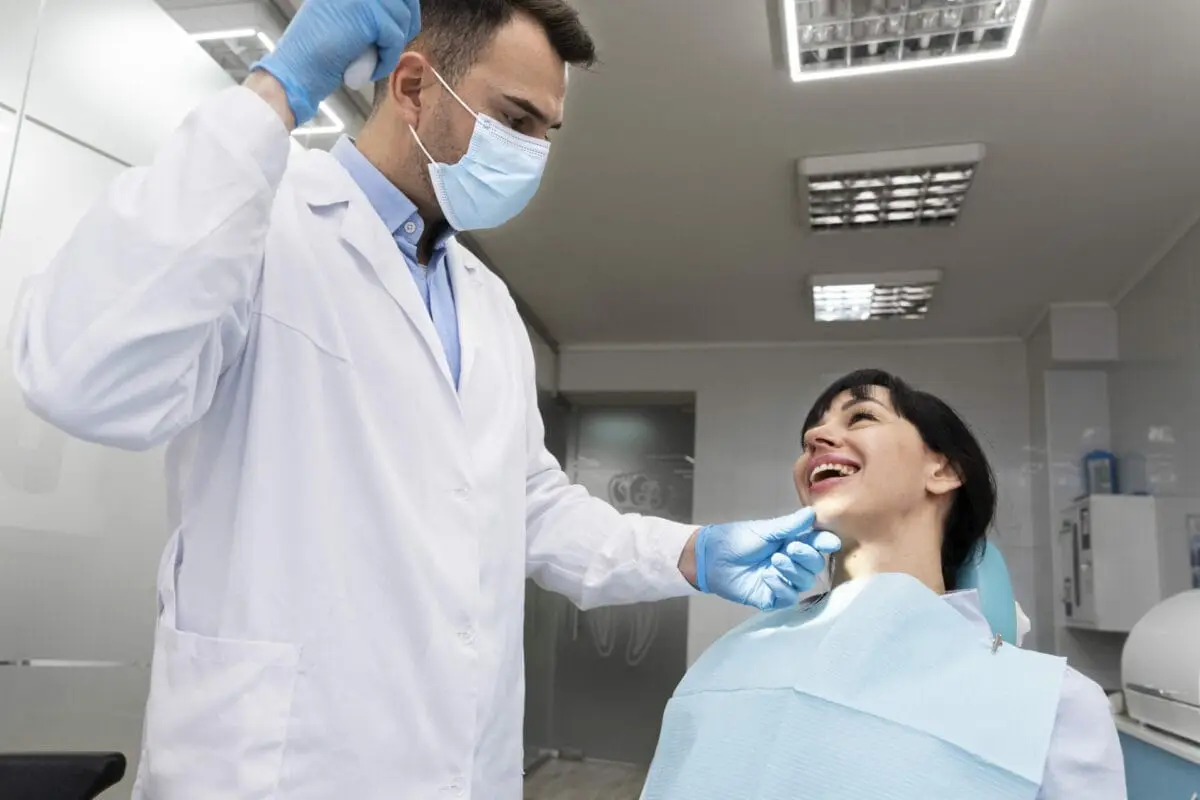
Every E-Max crown begins with a story that is rarely dramatic, yet deeply medical. A patient does not usually wake up needing a crown overnight. Instead, there is a gradual weakening of tooth structure that often goes unnoticed until function or aesthetics are affected. A large filling placed years ago begins to undermine remaining enamel. A tooth that has undergone root canal treatment loses internal hydration and becomes more brittle. Fine cracks develop invisibly beneath the surface, increasing the risk of sudden fracture.
At this point, the tooth is no longer failing — it is at risk. The role of restorative dentistry is to intervene before failure occurs. An E-Max crown is chosen not because a tooth is lost, but because it can still be saved if reinforced correctly.
This is where the medical reasoning begins.
Why a Tooth Becomes Structurally Unstable (Medical Explanation)
To understand why a crown becomes necessary, one must understand how natural teeth distribute force. Healthy enamel works like an external shell, absorbing and dispersing chewing forces across the tooth and into the jawbone. When large restorations, decay, or fractures compromise this shell, stress becomes concentrated in weak areas.
Over time, this uneven stress leads to microfractures. These fractures may not cause pain immediately, but they increase the likelihood of sudden tooth failure — often during normal chewing.
An E-Max crown restores structural integrity by encasing the weakened tooth, redistributing forces evenly and protecting remaining enamel from further stress.
This is not cosmetic reinforcement; it is biomechanical stabilization.
Tooth Preparation for an E-Max Crown: Why Precision Matters
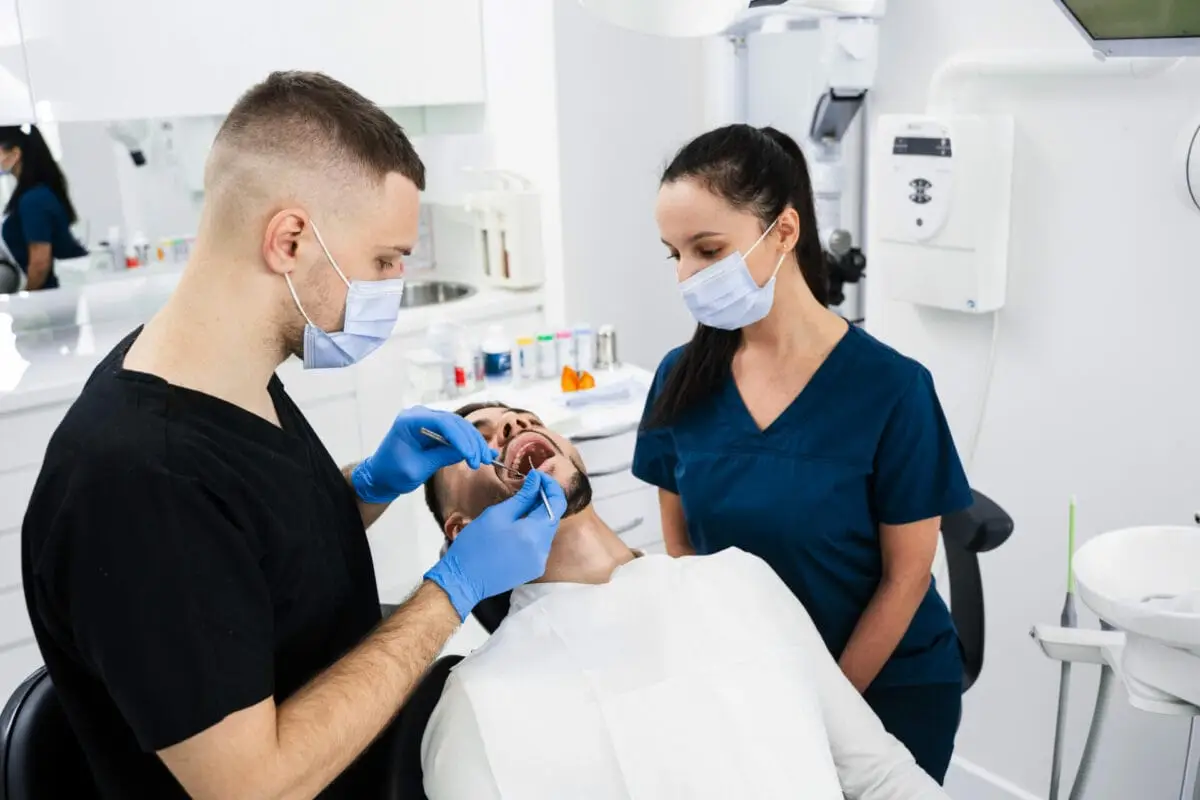
One of the most critical medical steps in E-Max crown treatment is tooth preparation. This stage determines whether the crown will function predictably for years or fail prematurely.
Unlike metal-based crowns, E-Max relies on adhesive bonding to enamel and dentin. This means preparation must be conservative yet exact. Too little reduction results in bulky, unnatural crowns. Too much reduction weakens the tooth unnecessarily.
At Medico Clinic, preparation is guided by:
Remaining enamel thickness
Occlusal load (how hard the patient bites)
Crown position in the mouth
Relationship with adjacent teeth
The goal is to create uniform thickness for the ceramic while preserving as much natural structure as possible.
Table: Tooth Condition vs Recommended Restoration (Medical Logic)
| Tooth Condition | Filling | E-Max Crown | Zirconium Crown |
|---|
| Small decay | ✔ Suitable | ❌ Excessive | ❌ Excessive |
| Large old filling | ❌ Risky | ✔ Ideal | ⚠ Possible |
| Post–root canal | ❌ Unsafe | ✔ Ideal | ✔ Ideal |
| Front tooth fracture | ❌ Weak | ✔ Ideal | ⚠ Less aesthetic |
| Heavy grinding | ❌ Unsafe | ⚠ Case-dependent | ✔ Preferred |
This table demonstrates why E-Max crowns are case-specific medical decisions, not default options.
The Adhesive Science Behind E-Max Crowns
Unlike traditional crowns that rely primarily on mechanical retention, E-Max crowns are bonded using advanced adhesive systems. This creates a chemical and micromechanical bond between crown and tooth, effectively turning them into a single unit.
This bonding approach:
However, it also requires strict isolation and technique sensitivity. Moisture contamination during bonding can compromise longevity. This is why E-Max crowns demand clinical discipline, not speed.
The Dental Laboratory Phase: Where Medicine Meets Craft
Once preparation is complete, the crown’s success depends on laboratory precision. Dental technicians do not simply “make a crown”; they reconstruct anatomy.
They analyze:
Occlusal anatomy (how teeth meet)
Contact points (to prevent food trapping)
Light transmission and translucency
Cervical margins (gum-level integration)
An E-Max crown is layered to simulate natural enamel and dentin behavior. This is not decorative artistry — it is functional anatomy replication.
Patient Storytelling: The Quiet Moment of Realization
Many patients describe a moment during treatment that is surprisingly emotional. It often happens when they see the provisional crown or when the final E-Max crown is tried in place before bonding. There is usually silence — not excitement, but recognition.
They recognize their own smile again.
This response is not about luxury. It is about relief. Relief that the tooth no longer feels fragile. Relief that smiling no longer feels risky. Relief that the solution does not look like a solution.
This emotional outcome is the result of medical planning, not aesthetics alone.
Table: E-Max Crown vs Natural Tooth (Functional Comparison)
| Funktion | Natural Tooth | E-Max Crown |
|---|
| Light transmission | Natural | Near-identical |
| Chewing efficiency | Optimal | Restored |
| Sensory feedback | Full | Slightly reduced |
| Structural strength | High | High (when bonded) |
| Aesthetic integration | Natural | Seamless |
This table explains why E-Max crowns are often described as the closest restorative alternative to natural enamel.
Bite Adjustment and Occlusal Harmony
One of the most overlooked aspects of crown dentistry is occlusal adjustment. A crown that looks perfect but carries excessive bite pressure will fail.
After bonding, the bite is adjusted so that:
Forces are evenly distributed
No single point carries excessive load
The crown integrates naturally into chewing patterns
This step protects not only the crown, but adjacent teeth and jaw joints.
Long-Term Biological Behavior of E-Max Crowns
E-Max crowns are biocompatible and gentle on opposing teeth when polished correctly. Unlike metal-based restorations, they do not create galvanic reactions or dark margins at the gum line.
Over time:
Longevity is strongly linked to case selection, bonding quality, and bite balance.
When an E-Max Crown Is Not the Right Choice (Ethical Dentistry)
Not every tooth should receive an E-Max crown. Teeth exposed to extreme bite forces, uncontrolled bruxism, or full-arch rehabilitation may require zirconium-based solutions.
Ethical dentistry means choosing durability over aesthetics when necessary. At Medico Clinic, material selection is guided by long-term prognosis, not marketing appeal.
Final Medical Perspective: Why E-Max Crowns Are About Preservation
An E-Max crown does not replace a tooth. It protects what remains. It intervenes at the moment where structure can still be saved and function can still be restored naturally.
This is why E-Max crowns belong to restorative medicine, not cosmetic dentistry.
Book your consultation today to determine whether an E-Max crown is the medically correct solution for preserving your tooth at Medico Clinic.