
+28,000 Smiles and Counting — Istanbul 🇹🇷 | London 🇬🇧

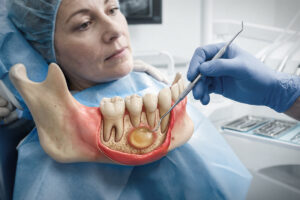
Cyst Removal in Dentistry
Why Early Diagnosis and Surgical Precision Matter
Dental cysts are often silent, slow-growing lesions that can exist for months—or even years—without causing noticeable pain. Yet beneath this quiet progression, cysts can gradually destroy bone, displace teeth, and compromise surrounding anatomical structures. In modern dentistry, cyst removal is not an emergency reaction—it is a preventive surgical intervention designed to stop progressive damage before it becomes complex.
In 2026, advances in diagnostic imaging and surgical planning allow dental cysts to be identified earlier and removed more safely than ever before. Understanding what dental cysts are, why they form, and when removal is necessary helps patients approach treatment with clarity rather than fear.
What Is a Dental Cyst?
A dental cyst is a pathological fluid-filled sac that develops within the jawbone or surrounding soft tissues. Most dental cysts originate from:
Infected or non-vital teeth
Impacted teeth (commonly wisdom teeth)
Developmental remnants of tooth-forming tissues
Cysts are typically benign, but their behavior can be locally destructive if left untreated.
Why Dental Cysts Are Often Discovered Late
One of the most concerning aspects of dental cysts is their lack of early symptoms. Because they grow slowly and expand within bone, patients may not feel pain until significant damage has occurred.
Dental cysts are frequently discovered during:
Routine dental X-rays
CBCT scans taken for implants or orthodontics
Evaluation of delayed tooth eruption
By the time symptoms appear, bone loss may already be advanced.
Common Types of Dental Cysts
Radicular (Periapical) Cysts
The most common type, typically associated with long-standing tooth infection. These cysts develop at the root tip of a non-vital tooth.
Dentigerous Cysts
Often linked to impacted teeth, especially wisdom teeth. These cysts form around the crown of an unerupted tooth and can grow significantly if undetected.
Odontogenic Keratocysts
Known for their aggressive growth pattern and higher recurrence rate. These cysts require careful surgical management and long-term monitoring.
Each cyst type requires a specific surgical approach based on size, location, and biological behavior.
When Is Cyst Removal Medically Necessary?
Cyst removal is recommended when:
Imaging confirms progressive enlargement
Bone destruction is evident
Adjacent teeth or nerves are at risk
Infection is present or likely
Implant or orthodontic treatment is planned
Observation alone is rarely sufficient once a cyst is diagnosed. Early surgical removal prevents escalation.
How Dental Cysts Are Diagnosed in 2026
Modern diagnosis relies on:
Digital panoramic X-rays
CBCT (3D imaging) for precise mapping
Clinical examination
Histopathological analysis after removal
Three-dimensional imaging allows clinicians to assess:
Exact cyst size
Proximity to nerves and sinuses
Degree of bone involvement
This precision reduces surgical risk and improves outcomes.
Cyst Removal Surgery: What the Procedure Involves
Dental cyst removal is a controlled surgical procedure performed under local anesthesia, sedation, or general anesthesia depending on complexity.
Typical surgical steps include:
Accessing the cyst through a small bone window
Complete removal of the cyst lining
Preservation of surrounding anatomical structures
Thorough cleaning of the surgical site
In some cases, the associated tooth must also be treated or removed.
Enucleation vs Marsupialization
Enucleation
Complete removal of the cyst in one procedure
Preferred for small to moderate cysts
Lower recurrence risk
Marsupialization
Decompression of large cysts to reduce size gradually
Followed by definitive removal later
Used when immediate full removal risks structural damage
The choice depends on size, location, and patient-specific factors.
Bone Healing After Cyst Removal
Once a cyst is removed, the body begins natural bone regeneration. In larger defects, bone grafting may be recommended to:
Accelerate healing
Restore jaw strength
Prepare the area for future implants
Healing timelines vary but generally span several months, during which follow-up imaging is essential.
Risks and How They Are Managed
Dental cyst removal is considered safe when properly planned. Potential risks include:
Temporary swelling or discomfort
Infection (rare)
Nerve irritation in advanced cases
In 2026, these risks are minimized through:
CBCT-guided planning
Conservative surgical techniques
Strict sterilization protocols
All surgical materials and techniques follow international medical standards regulated by organizations such as the U.S. Food and Drug Administration.
Cyst Removal and Future Dental Treatment
Untreated cysts can compromise:
Dental implant success
Orthodontic outcomes
Jawbone stability
Removing cysts early preserves treatment options and prevents the need for extensive reconstruction later.
Dental Cyst Removal for International Patients
For dental tourism patients, cyst removal requires careful coordination:
Adequate healing time before travel
Access to post-operative support
Clear documentation for follow-up care
Advanced clinics plan surgery timelines to ensure safe recovery and continuity of care.
Final Medical Perspective: Silent Does Not Mean Harmless
Dental cysts may be painless—but they are not passive.
In 2026, ethical dentistry treats cyst removal as a preventive surgical necessity, not a last resort. Early diagnosis, precise removal, and structured follow-up protect jaw integrity, tooth stability, and long-term oral health.
Ignoring a cyst does not make it disappear.
Removing it early makes treatment simpler—and safer.
Get a Professional Evaluation for Dental Cysts
If imaging has revealed a dental cyst—or if you are planning implants or wisdom tooth surgery—proper assessment is essential.
Fill out the consultation form on our website for a detailed surgical evaluation
Or contact us directly via WhatsApp to share your scans and receive expert guidance
👉 Early intervention prevents complex surgery later.
Reach out today to determine whether cyst removal is medically necessary and plan your treatment with confidence.