
+28,000 Smiles and Counting — Istanbul 🇹🇷 | London 🇬🇧

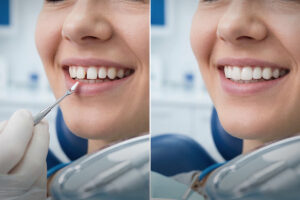
Composite Bonding for Gaps
Small gaps between teeth—especially between the front teeth—are one of the most common cosmetic concerns in dentistry. Many patients immediately assume that veneers are the only solution. In reality, that is often not true. In 2026, conservative cosmetic dentistry prioritizes tooth preservation first, and composite bonding has become one of the most effective ways to close gaps without aggressive tooth preparation.
If you have spacing between your teeth and want improvement without permanently altering healthy enamel, composite bonding may be the solution you are looking for.
What Is Composite Bonding?
Composite bonding is a minimally invasive cosmetic procedure that uses tooth-colored resin material to reshape or add volume to natural teeth. The material is carefully applied, sculpted, and polished to blend seamlessly with surrounding enamel.
Unlike veneers, which usually require enamel reduction and laboratory fabrication, composite bonding is typically completed in a single appointment and often requires little to no tooth preparation.
Why Do Gaps Form Between Teeth?
Gaps, also known as diastemas, can develop for several reasons. Some patients naturally have spacing due to jaw size and tooth proportions. Others may develop gaps from:
Gum disease causing bone loss
Missing teeth
Thumb sucking habits in childhood
Orthodontic relapse
Mismatch between tooth size and arch size
Understanding the cause of the gap is important before choosing treatment.
When Composite Bonding Is a Better Option Than Veneers
Виниры are powerful cosmetic tools, but they are not always necessary—especially when the goal is simply to close small gaps.
When the Gap Is Small to Moderate
Composite bonding works best for minor spacing issues. When the gap is not structurally complex, adding composite material to the sides of teeth can create natural-looking contact without overbuilding the smile.
When Teeth Are Healthy and Well-Aligned
If the teeth are already straight and healthy, placing veneers may require unnecessary enamel reduction. Composite bonding allows cosmetic correction while preserving natural tooth structure.
Preserving enamel is critical because once it is removed, it cannot regenerate.
When Patients Want a Reversible or Conservative Option
One of the major advantages of composite bonding is that it is more conservative and, in many cases, partially reversible. Veneers are permanent restorations that commit the patient to lifelong maintenance cycles.
For younger patients especially, bonding is often the safer starting point.
Composite Bonding vs Veneers: Key Differences
Composite bonding and veneers serve similar cosmetic goals but differ significantly in approach.
Composite bonding is applied directly to the tooth, usually in one visit, and requires minimal preparation. Veneers are custom-made ceramic shells that often require enamel removal and laboratory fabrication.
Bonding is more conservative but may have a slightly shorter lifespan compared to porcelain veneers. Veneers offer greater stain resistance and durability but at the cost of irreversible enamel reduction.
The right option depends on case complexity—not popularity.
How Long Does Composite Bonding Last?
With proper care, composite bonding can last between 5 to 8 years or longer. Longevity depends on:
гигиена полости рта
Bite alignment
Avoidance of excessive force
Regular dental check-ups
Bonding can be repaired easily if chipped, which is another advantage over ceramic restorations.
Can Composite Bonding Look Natural?
Modern composite materials in 2026 are highly aesthetic. When layered properly, they mimic:
Natural translucency
Surface texture
Light reflection
The final result depends heavily on clinician skill and artistic precision. Well-executed bonding is virtually undetectable.
When Veneers May Still Be Necessary
Composite bonding is not suitable for every case.
Veneers may be recommended when:
Teeth are severely discolored
Significant shape correction is required
Large structural defects exist
Multiple cosmetic concerns need simultaneous correction
In complex smile makeovers, veneers may provide better long-term structural control.
The key is correct diagnosis—not default treatment.
Risks and Limitations of Composite Bonding
Although conservative, composite bonding has limitations.
It may:
Stain over time
Chip under heavy bite force
Require occasional polishing or repair
Patients who grind their teeth may require night guards to protect bonded surfaces.
All dental materials used in bonding procedures comply with international safety standards regulated by authorities such as the U.S. Food and Drug Administration.
Why Conservative Cosmetic Dentistry Matters in 2026
The philosophy of cosmetic dentistry has shifted. Instead of aggressive full-mouth veneers, clinicians now prioritize:
Enamel preservation
Functional harmony
Долгосрочное биологическое здоровье
Closing a gap should not mean sacrificing healthy tooth structure unnecessarily.
Often, less intervention produces better long-term outcomes.
Is Composite Bonding Right for You?
You may be a good candidate for composite bonding if:
Your gap is small or moderate
Your teeth are healthy
You prefer a minimally invasive solution
You want a faster, more affordable treatment option
A professional evaluation is essential to confirm suitability.
Final Perspective: Preserve First, Enhance Second
Cosmetic dentistry should improve your smile without compromising your natural teeth. Composite bonding offers a conservative way to close gaps while maintaining enamel integrity.
Veneers are powerful tools—but they are not always necessary. In many cases, bonding achieves excellent aesthetic results with far less biological cost.
The smartest cosmetic choice is not always the most dramatic one. It is the one that protects your teeth long-term.
Want to Close Your Gaps Without Veneers?
If you are considering cosmetic treatment for gaps between your teeth and want to know whether composite bonding is suitable for your case, professional evaluation is the first step.
At Medico Clinic, we assess tooth health, bite balance, and aesthetic goals before recommending any cosmetic procedure.
👉 Fill out the consultation form on our website for a personalized smile assessment.
👉 Or contact us directly via WhatsApp to share your photos and receive expert guidance.
Your smile deserves enhancement—not unnecessary reduction.
Let’s choose the most conservative solution for you.