
+28,000 Smiles and Counting — Istanbul 🇹🇷 | London 🇬🇧

Bone Grafting for Dental Implants: When Jawbone Augmentation Becomes Medically Necessary
Dental implants rely on one critical factor for long-term success: stable, healthy bone. When jawbone volume or density is insufficient, placing an implant without preparation significantly increases the risk of failure. Bone grafting is not an optional add-on—it is a medically indicated procedure designed to rebuild lost structure and restore the foundation required for implant integration.
In 2026, bone grafting is no longer viewed as a complication. It is a predictive planning tool that allows implant treatment to proceed safely, even in complex cases.
Why Bone Loss Happens Before Implant Treatment
Jawbone loss is a biological response to missing teeth. When a tooth is lost, the surrounding bone no longer receives stimulation from chewing forces. Over time, the body begins to resorb unused bone.
Common causes of bone loss include:
Long-term tooth loss without replacement
Advanced gum disease (periodontitis)
Trauma or infection
Ill-fitting dentures
Delayed implant placement after extraction
Bone loss can occur vertically (height), horizontally (width), or both—each affecting implant feasibility differently.
What Is Bone Grafting in Implant Dentistry?
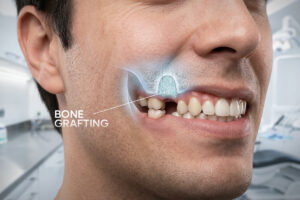
Bone grafting is a surgical procedure that adds or regenerates bone in areas where volume is insufficient for implant placement. The graft material acts as a scaffold, encouraging the body to form new bone over time.
The goal is not simply to “fill space,” but to create living bone capable of supporting an implant under functional load.
When Is Bone Grafting Medically Necessary?
Bone grafting is recommended only when specific clinical criteria are met.
1. Insufficient Bone Width
Implants require surrounding bone on all sides for stability. If the ridge is too narrow, implants risk exposure or failure.
2. Reduced Bone Height
In the upper jaw, bone loss may bring the sinus cavity too close to the implant site. In the lower jaw, nerve proximity becomes a concern. Bone grafting restores safe vertical dimensions.
3. Bone Defects After Infection
Previous infections or cysts can destroy bone locally. Grafting allows reconstruction before implant placement.
4. Aesthetic Zone Stability
In front teeth, bone volume supports not only the implant—but also the gum tissue and natural appearance of the smile.
Types of Bone Graft Materials Used in 2026
Modern implant dentistry uses several grafting materials, each selected based on clinical need.
Autogenous Bone (Patient’s Own Bone)
Harvested from the jaw or other sites
Highest biological compatibility
Often used in complex reconstructions
Allograft (Donor Bone)
Processed human bone from certified tissue banks
Commonly used with excellent safety records
Xenograft (Animal-Derived Bone)
Typically bovine origin
Provides long-term structural support
Synthetic Bone Substitutes
Biocompatible materials that stimulate bone growth
Often combined with natural grafts
Advanced cases often use combination grafting to balance stability and regeneration.
Bone Grafting Techniques in Implant Dentistry
Socket Preservation
Performed immediately after tooth extraction to prevent bone collapse. This reduces or eliminates the need for future grafting.
Ridge Augmentation
Used to rebuild lost width or height in areas where bone has resorbed over time.
Sinus Lift Procedures
Performed in the upper jaw to increase vertical bone height beneath the sinus cavity.
Guided Bone Regeneration (GBR)
Uses barrier membranes to protect the graft while bone regenerates, preventing soft tissue interference.
Each technique is selected based on anatomy, timing, and implant goals.
Healing Timeline: What Patients Should Expect
Bone grafting is a biological process, not an instant fix.
Typical healing phases:
Initial healing: 1–2 weeks
Bone regeneration: 3–6 months
Implant placement (if staged): after confirmed integration
Rushing this process compromises implant stability. In 2026, success depends on respecting biological timelines, not compressing them.
Does Bone Grafting Increase Implant Success?
Yes—when correctly indicated.
Bone grafting:
Restores proper implant positioning
Improves load distribution
Reduces long-term failure risk
Enhances aesthetic outcomes
Implants placed in insufficient bone without grafting are far more likely to fail, regardless of implant brand or technique.
When Bone Grafting May Not Be Necessary
Not all implant cases require grafting.
Bone grafting may be avoided when:
Implants are placed immediately after extraction in healthy bone
Short or angled implants are clinically appropriate
Advanced implant systems (e.g., basal or zygomatic implants) are indicated
Avoiding grafting is acceptable only when medical safety is preserved.
Risks and Safety Considerations
Bone grafting is a predictable procedure when properly planned. Potential risks include:
Temporary swelling or discomfort
Infection (rare with proper protocols)
Partial graft resorption
These risks are minimized through:
CBCT-based planning
Sterile surgical protocols
Proper material selection
All graft materials and techniques used in modern dentistry comply with international medical standards regulated by organizations such as the U.S. Food and Drug Administration.
Bone Grafting and International Patients
For dental tourism patients, timing is critical. Advanced clinics plan grafting procedures to:
Align with travel schedules
Minimize the number of visits
Ensure continuity of care
Patients should expect clear timelines and staged planning, not rushed implant placement.
Final Medical Perspective: Foundation Before Function
Bone grafting is not a setback—it is a strategic investment in implant success.
In 2026, ethical implant dentistry prioritizes foundation over speed. When bone volume is insufficient, grafting restores the conditions necessary for implants to function safely, predictably, and long-term.
Implants do not fail because grafting was performed.
They fail when grafting was needed—but skipped.
Get a Professional Bone Evaluation Before Implant Treatment
If you are considering dental implants and have been told you may need bone grafting, proper diagnosis is essential.
Fill out the consultation form on our website for a detailed implant assessment
Or contact us directly via WhatsApp to share your scans and receive professional guidance
👉 Strong implants start with strong foundations.
Reach out today to determine whether bone grafting is medically necessary for your case and plan your treatment with confidence.