
28 000 sourires et le compte est bon - Rejoignez-nous à Istanbul 🇹🇷🇹🇷

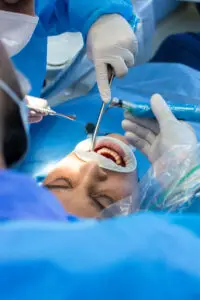
How Many Teeth Can Be Fixed on One Implant in Turkey?
Losing one or more teeth often triggers a chain of concerns that go far beyond appearance. Patients begin to worry about chewing properly, speaking clearly, facial changes, and whether replacing missing teeth will require multiple surgeries, long healing times, or unaffordable costs. One of the most common and surprisingly complex questions patients ask is: How many teeth can actually be fixed on a single implant dentaire?
This question becomes even more relevant for international patients considering treatment in Turkey, where advanced implant dentistry, experienced specialists, and cost-effective solutions have positioned the country as a global leader in dentaire care. The answer is not a fixed number, because implant dentistry is not about replacing teeth one by one—it is about restoring function intelligently, safely, and sustainably.
Understanding the Role of a Dental Implant
A Tooth Root, Not a Tooth
A implant dentaire is not a tooth itself, but an artificial root—usually made of titanium—that integrates with the jawbone through a biological process known as osseointegration. Once this integration is complete, the implant becomes a stable foundation capable of supporting one or more prosthetic teeth.
This distinction is critical. Teeth are visible structures, while implants are anchors. The number of teeth that can be supported depends on bone quality, implant position, bite forces, and the type of restoration placed on top.
Why Implants Are So Strong
Modern implants are engineered to distribute chewing forces evenly into the jawbone, preventing the bone loss that naturally occurs after tooth loss. When placed correctly, implants can support significant loads, which is why a single implant can sometimes replace more than one missing tooth.
How Many Teeth Can One Implant Support?
One Implant, One Tooth
In the simplest scenario, a single implant supports a single crown. This approach is commonly used when one tooth is missing and surrounding teeth are healthy. It provides excellent aesthetics, function, and long-term stability without affecting adjacent teeth.
One Implant, Two Teeth
In certain cases, one implant can support two teeth by acting as an anchor for a small bridge. This is typically possible when the missing teeth are smaller and located in areas with lower biting forces, such as the front or premolar region.
However, dentists carefully evaluate load distribution to ensure the implant is not overloaded over time.
Multiple Teeth on Strategic Implant Placement
The real innovation in modern implant dentistry lies in full-arch and partial-arch solutions. Using carefully planned implant placement, dentists can restore several teeth—or even an entire jaw—using a limited number of implants.
Advanced Solutions Used in Turkey
Implant-Supported Bridges
In Turkey, implant-supported bridges are commonly used to replace three to six missing teeth using two or more implants. This method avoids placing an implant for every missing tooth, reducing surgical complexity and overall treatment time.
The bridge distributes biting forces across multiple implants, ensuring long-term durability while maintaining comfort and aesthetics.
All-on-4 and All-on-6 Concepts
One of the most transformative solutions in modern dentistry is the All-on-4 and All-on-6 implant systems. With as few as four or six implants, an entire arch of 10 to 14 teeth can be restored.
This approach is particularly popular among international patients because it:
Reduces the number of implants needed
Shortens treatment time
Often allows for same-day temporary teeth
Provides a fixed, non-removable solution
These systems rely on precise angulation and strategic implant placement to maximize bone support and stability.
What Determines How Many Teeth Can Be Fixed?
Bone Quality and Volume
The jawbone must be strong enough to support the implant and the teeth attached to it. Patients with bone loss may still be candidates for advanced techniques, such as angled implants or bone grafting, but the final plan depends on detailed imaging and analysis.
Bite Force and Jaw Dynamics
Patients who grind their teeth or generate strong biting forces require more conservative implant planning. Dentists must ensure that implants are not overloaded, as excessive pressure can compromise long-term success.
Implant Position
Implants placed in the front of the mouth experience different forces than those placed in the back. Strategic positioning allows dentists to safely increase the number of teeth supported without risking implant failure.
Why Turkey Is a Preferred Destination for Implant Dentistry
Advanced Technology and Expertise
Dental clinics in Turkey invest heavily in digital imaging, 3D planning, and guided implant surgery. These technologies allow dentists to design restorations that maximize implant efficiency while maintaining safety and precision.
Cost-Effective Without Compromising Quality
One of the reasons patients travel to Turkey is the ability to receive advanced implant treatments at a fraction of the cost compared to many Western countries. This makes comprehensive solutions, such as full-arch restorations, accessible to a wider range of patients.
Experience With International Patients
Turkish dental clinics are highly experienced in treating patients from abroad, offering streamlined treatment timelines, multilingual support, and coordinated care plans that accommodate travel schedules.
Long-Term Success and Maintenance
Stability Over Time
When implants are placed correctly and restorations are designed to distribute forces evenly, implant-supported teeth can last for decades. Regular checkups and good oral hygiene play a key role in maintaining long-term success.
Natural Feel and Function
Patients often report that implant-supported teeth feel more natural than removable dentures. Because implants integrate with the bone, they provide stability, confidence, and improved chewing efficiency.
So, How Many Teeth Can One Implant Fix?
The answer depends on your individual anatomy and treatment goals. One implant can support:
One tooth in simple cases
Two teeth in selected situations
Several teeth or even a full arch when combined with advanced systems like All-on-4 or All-on-6
There is no universal number, only a personalized solution designed around safety, longevity, and comfort.
Discover Your Implant Options at Medico Clinic
If you are considering dental implants and want to understand how many teeth can be restored in your specific case, expert planning is essential. At Clinique Medico, our implant specialists use advanced diagnostic tools and proven treatment protocols to design solutions tailored to your needs—whether you are missing one tooth or an entire arch.
👉 Contactez Medico Clinic aujourd'hui for an online consultation and personalized implant evaluation.
Restore your smile efficiently, safely, and confidently — with solutions designed for long-term success.