
+28,000 Smiles and Counting — Istanbul 🇹🇷 | London 🇬🇧

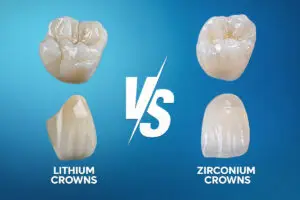
Zirconia vs Lithium Disilicate Crowns: Choosing Strength or Translucency
When a tooth requires a full-coverage crown, one of the most important decisions is the choice of material. In 2026, two of the most widely used ceramic options are zirconia crowns et lithium disilicate crowns. Both are metal-free, highly aesthetic, and biocompatible. However, they are not interchangeable.
The difference between them is not about which one is “better,” but rather about whether your case requires maximum strength or maximum translucency. Understanding this distinction helps patients choose a crown that will perform well not only cosmetically, but functionally for many years.
What Is a Zirconia Crown?
Zirconia crowns are made from zirconium dioxide, a high-strength ceramic originally used in orthopedic and aerospace applications. In dentistry, zirconia is valued for its exceptional durability and fracture resistance.
Modern zirconia materials have improved significantly in aesthetics compared to earlier generations. Today’s multilayered zirconia crowns can mimic natural shade gradients while maintaining structural strength. However, zirconia still prioritizes mechanical performance over optical translucency.
For patients who generate strong bite forces or require crowns on molars, zirconia is often the safer choice.
What Is a Lithium Disilicate Crown?
Lithium disilicate, commonly known by brand names such as E.max, is a glass-ceramic material prized for its natural translucency. It closely resembles the way natural enamel interacts with light.
Because of this optical quality, lithium disilicate is frequently used for front teeth where aesthetics are highly visible. While it is strong compared to traditional porcelain, it does not reach the fracture resistance levels of zirconia.
In aesthetic zones, translucency can be more important than extreme strength.
Strength: When Durability Comes First
Back teeth endure significant chewing pressure. Patients who grind or clench their teeth place even greater mechanical stress on restorations. In these situations, choosing a material that resists fracture is critical.
Zirconia crowns offer superior flexural strength and are less likely to chip or crack under heavy load. This makes them ideal for:
Molars and premolars
Full-arch implant restorations
Patients with bruxism
Cases requiring long-span bridges
When durability is the primary concern, zirconia provides long-term security.
Translucency: When Natural Aesthetics Matter Most
Front teeth require a different set of priorities. Light reflection and translucency influence how natural a smile appears. Lithium disilicate crowns allow light to pass through the material in a way that closely resembles natural enamel.
This makes them particularly suitable for:
Single front tooth crowns
Cosmetic smile harmonization
Cases with high aesthetic demand
Patients with thin gum tissue where material visibility matters
In these cases, the optical advantage of lithium disilicate can produce a more lifelike result.
Biomechanics and Tooth Position
Material choice is not only about strength or beauty. It must also consider the position of the tooth within the mouth. The farther back a tooth sits, the greater the chewing force it must withstand.
Additionally, bite alignment plays a significant role. If the patient has a heavy occlusion or uneven bite distribution, a stronger material reduces risk of long-term failure.
Digital bite analysis in 2026 allows clinicians to evaluate these forces before selecting crown materials, ensuring that the decision is based on functional reality rather than preference alone.
Longevity and Wear
Both zirconia and lithium disilicate crowns can last many years when properly placed. However, zirconia generally demonstrates higher resistance to fracture under extreme stress.
Lithium disilicate offers excellent durability for moderate load situations but may be more susceptible to chipping in high-pressure environments.
Long-term success depends not only on the material, but also on:
Proper tooth preparation
Accurate crown fit
Balanced bite design
Regular maintenance
All materials used in modern restorative dentistry comply with international medical safety standards regulated by authorities such as the U.S. Food and Drug Administration.
Can Zirconia Be Used for Front Teeth?
Yes. Advances in multilayer zirconia have significantly improved aesthetics. In some cases, especially when strength is required due to bite stress, zirconia can be used successfully in the front region.
However, when maximum translucency and subtle light transmission are the priority, lithium disilicate may still provide a superior cosmetic match.
Is One Material More Expensive?
Cost differences vary depending on laboratory processes and complexity. Generally, lithium disilicate crowns may involve more aesthetic layering and customization for front teeth, while zirconia crowns are often favored in structurally demanding cases.
However, material selection should never be based on price alone. Choosing the wrong material to save costs may result in earlier replacement and higher long-term expense.
The Real Decision: Function First, Aesthetics Second
The most successful crown treatments begin with a functional assessment and end with aesthetic refinement. Strength and translucency are not opposing goals; they are priorities that shift depending on location and biomechanical demand.
In posterior regions, strength protects longevity. In anterior regions, translucency enhances natural beauty. The right crown material balances both elements according to your unique case.
Final Perspective: Personalized Material Selection
Zirconia vs lithium disilicate is not a competition. It is a clinical decision guided by anatomy, bite force, tooth position, and aesthetic expectations.
When properly selected, both materials deliver durable, beautiful results. The key lies in diagnosis, planning, and precise execution.
Unsure Which Crown Material Is Right for You?
If you have been advised to get a dental crown and want to understand whether zirconia or lithium disilicate is best for your case, professional evaluation is essential.
At Medico Clinic, we analyze bite dynamics, tooth position, and aesthetic goals before recommending any restorative material.
You can fill out the consultation form on our website for a personalized crown assessment, or contact us directly via WhatsApp to share photos or X-rays and receive expert guidance.
Choosing the right crown material today protects your smile for years to come. Let’s make the decision based on precision—not guesswork