
Istanbul 🇹🇷 | London 🇬🇧 | USA 🇺🇸| Bangkok 🇹🇭


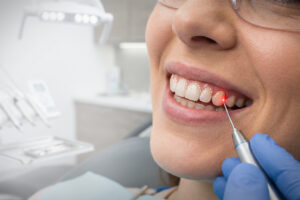
Laser Gum Therapy
Gum disease remains one of the leading causes of tooth loss in adults, yet its progression is often silent until significant damage has occurred. In 2026, periodontal care has moved beyond purely mechanical cleaning toward biologically guided, minimally invasive treatment. Laser gum therapy represents this shift—offering targeted bacterial control, improved tissue healing, and reduced surgical trauma when used correctly.
Laser gum therapy is not a cosmetic upgrade. It is a clinical tool designed to manage periodontal disease more precisely while preserving healthy tissue.
What Is Laser Gum Therapy?
Laser gum therapy uses focused light energy to treat infected gum tissue and bacterial biofilm within periodontal pockets. Unlike traditional surgical approaches that rely on incisions and sutures, lasers allow clinicians to selectively target diseased tissue while minimizing disruption to healthy structures.
In periodontal care, lasers are primarily used to:
Reduce harmful bacteria
Remove inflamed or infected gum tissue
Stimulate natural healing responses
Support reattachment of gum tissue to teeth
Why Periodontal Treatment Is Evolving
Traditional gum disease treatment—such as scaling and root planing—remains effective and essential. However, advanced or persistent cases may require additional intervention.
By 2026, periodontal therapy emphasizes:
Precision over aggression
Tissue preservation over removal
Faster healing with fewer complications
Laser therapy complements conventional treatment rather than replacing it.
How Laser Gum Therapy Works
Laser periodontal treatment follows a structured clinical protocol:
Assessment of periodontal pocket depth and infection severity
Laser application to eliminate bacteria and inflamed tissue
Mechanical cleaning of root surfaces (scaling)
Laser reapplication to support clot formation and tissue sealing
The laser’s energy selectively interacts with pigmented bacteria and diseased tissue, leaving healthy gum tissue largely unaffected.
When Is Laser Gum Therapy Medically Appropriate?
Laser gum therapy is most effective in moderate to advanced periodontal disease, especially when traditional methods alone are insufficient.
Common indications include:
Deep periodontal pockets
Persistent gum inflammation
Bleeding gums despite prior treatment
Early bone loss detected on imaging
Patients seeking minimally invasive alternatives
It may also be used as an adjunct in peri-implantitis (gum inflammation around dental implants) in selected cases.
When Laser Therapy Is Not Enough on Its Own
Laser gum therapy is not a universal solution.
It may be insufficient when:
Bone loss is severe and widespread
Teeth are already structurally compromised
Surgical access is required for regeneration
In these cases, laser therapy may still play a supportive role—but surgical periodontal treatment remains necessary.
Laser Gum Therapy vs Traditional Periodontal Surgery
| Aspect | Laser Gum Therapy | Traditional Surgery |
|---|---|---|
| Invasiveness | Minimal | Modérée à élevée |
| Incisions | None | Required |
| Bleeding | Reduced | More pronounced |
| Healing time | Faster | Plus long |
| Tissue preservation | Élevé | Modérée à élevée |
Both approaches are valid. The correct choice depends on disease severity, anatomy, and treatment goals.
Clinical Benefits Observed in 2026
When properly indicated, laser gum therapy offers:
Reduced bacterial load
Less post-treatment discomfort
Minimal swelling and bleeding
Faster return to daily activities
Improved patient compliance
Importantly, lasers enhance healing quality, not just comfort.
Safety and Regulation
Dental lasers used in periodontal therapy comply with international medical device standards and are regulated by authorities such as the U.S. Food and Drug Administration. Safety depends on:
Proper training
Correct wavelength selection
Controlled clinical protocols
Laser gum therapy is safe when performed by trained clinicians within approved indications.
Patient Experience During Laser Gum Therapy
Most patients describe the procedure as:
Comfortable
Minimally invasive
Well-tolerated without anesthesia or with minimal local anesthesia
Post-treatment recovery is typically quicker than surgical alternatives, with fewer restrictions.
Long-Term Results and Maintenance
Laser gum therapy does not eliminate the need for ongoing periodontal maintenance. Long-term success depends on:
Regular professional cleanings
Effective home oral hygiene
Control of risk factors (smoking, diabetes)
Laser treatment improves the environment for healing—but maintenance preserves the result.
Laser Gum Therapy and Dental Tourism
For international patients, laser gum therapy is particularly attractive due to:
Short treatment sessions
Minimal downtime
Reduced need for extended stays
Advanced clinics integrate laser therapy into structured periodontal programs, ensuring continuity of care after patients return home.
Ethical Considerations in Periodontal Laser Use
In 2026, ethical periodontal care means:
Recommending laser therapy only when clinically beneficial
Avoiding claims that lasers “replace” all surgery
Explaining limitations clearly
Technology should support treatment—not oversell it.
Final Medical Perspective: Precision Over Force
Laser gum therapy represents a refinement—not a replacement—of periodontal treatment.
When used appropriately, it enhances bacterial control, supports tissue healing, and improves patient comfort. When used indiscriminately, it adds little value. The difference lies in diagnosis, planning, and professional judgment.
Healthy gums are not achieved through technology alone—but through targeted, evidence-based care.
Get a Professional Periodontal Evaluation
If you are experiencing bleeding gums, gum recession, or persistent inflammation, early evaluation is essential.
Fill out the consultation form on our website for a personalized periodontal assessment
Or contact us directly via WhatsApp to share your images and receive professional guidance
👉 Gum health is the foundation of long-term dental stability.
Reach out today to determine whether laser gum therapy is the right solution for your periodontal needs.