
Istanbul 🇹🇷 | London 🇬🇧 | USA 🇺🇸| Bangkok 🇹🇭


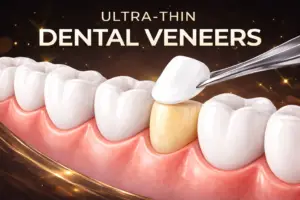
Ultra-Thin Dental Veneers: How Tooth Preservation Is Redefining Cosmetic Dentistry
Cosmetic dentistry in 2026 is no longer defined by dramatic transformation alone. It is increasingly defined by restraint, precision, and respect for natural tooth structure. Ultra-thin dental veneers represent this shift. Rather than reshaping teeth aggressively to achieve a new smile, modern veneer dentistry focuses on preserving what already exists.
Ultra-thin veneers are not simply a cosmetic trend. They reflect a broader medical philosophy: the best aesthetic dentistry is the kind that interferes the least with healthy enamel while delivering stable, natural-looking results.
What Are Ultra-Thin Dental Veneers?
Ultra-thin facettes dentaires are ceramic restorations—often measuring 0.2 to 0.4 millimeters in thickness—bonded to the front surface of teeth. Unlike traditional veneers, which may require significant enamel reduction, ultra-thin veneers are designed to work with the natural contours of the tooth.
In selected cases, they can be placed with:
Minimal tooth preparation
Partial enamel reshaping
Or, in rare situations, no preparation at all
Their success relies on advanced materials, precise bonding techniques, and strict case selection.
Why Tooth Preservation Matters More in 2026
Natural enamel is irreplaceable. Once removed, it cannot regenerate. For decades, cosmetic dentistry prioritized visual outcomes without fully accounting for long-term biological cost.
By 2026, clinical philosophy has shifted toward:
Maximizing enamel preservation
Reducing lifetime restoration cycles
Lowering the risk of sensitivity and structural fatigue
Ultra-thin veneers align with this approach by offering cosmetic enhancement without sacrificing tooth integrity.
The Science Behind Ultra-Thin Veneers
The strength of ultra-thin veneers does not come from bulk—it comes from adhesion.
Modern bonding systems create a strong micromechanical and chemical bond between ceramic and enamel. When bonded correctly, ultra-thin veneers behave as part of the tooth rather than a separate layer.
Key factors include:
High-quality ceramic materials
Precise surface conditioning
Enamel-dominant bonding surfaces
When these elements are present, thin does not mean fragile.
When Ultra-Thin Veneers Are Clinically Appropriate
Ultra-thin veneers are not suitable for every cosmetic concern. They are most effective in cases where structural correction is minimal.
Ideal indications include:
Mild discoloration resistant to whitening
Small gaps between teeth
Minor shape or size discrepancies
Slight surface irregularities
In these situations, veneers can refine the smile without altering bite dynamics or tooth strength.
When Ultra-Thin Veneers Are Not the Right Choice
Preservation does not mean compromise. Ultra-thin veneers are contraindicated when:
Teeth are severely misaligned
Enamel is significantly worn or eroded
Large fillings dominate the bonding surface
Bruxism places excessive load on the front teeth
In such cases, stronger restorations or orthodontic correction may provide safer long-term outcomes.
Advances in Veneer Dentistry by 2026
Improved Ceramic Materials
Modern ceramics offer enhanced translucency and fracture resistance, allowing thin restorations to mimic natural enamel without opacity.
Digital Smile Design
Digital planning ensures veneers complement facial proportions, lip dynamics, and existing tooth structure—reducing the need for aggressive preparation.
Precision Milling
High-resolution milling produces margins that integrate seamlessly with enamel, lowering the risk of marginal leakage and gum irritation.
Patient Experience and Expectations
Patients often report:
Minimal post-treatment sensitivity
Shorter recovery time
A natural look and feel
However, ultra-thin veneers are not designed to correct major functional issues. They are a refinement tool—not a structural repair.
Understanding this distinction protects both expectations and outcomes.
Regulatory and Safety Perspective
Ceramic veneer materials and bonding systems comply with international dental safety standards and are regulated by organizations such as the U.S. Food and Drug Administration. Their use is considered safe when applied within approved clinical indications.
Final Medical Perspective: Less Can Be More
Ultra-thin dental veneers represent a shift from transformation to preservation.
In 2026, cosmetic dentistry is not about changing smiles—it is about revealing them. When tooth structure is respected, enamel is preserved, and function is maintained, aesthetic results become more stable and more sustainable.
The most advanced cosmetic dentistry does not announce itself. It simply allows patients to smile comfortably, confidently, and without compromise.
Take the Next Step With Professional Evaluation
If you are considering ultra-thin dental veneers, the first step is determining whether your teeth are suitable for a preservation-focused approach.
Fill out the consultation form on our website for a personalized smile assessment
Or contact us directly via WhatsApp to share photos and receive professional guidance
👉 Cosmetic dentistry should protect your teeth—not just enhance them.
Reach out today to explore whether ultra-thin veneers are the right solution for your smile.