
Istanbul 🇹🇷 | London 🇬🇧 | USA 🇺🇸| Bangkok 🇹🇭


When High-Strength Ceramics Are Medically Necessary
Dentistry in 2026 continues to move away from material choice based on appearance alone. Today, restorative decisions are increasingly driven by biomechanics, longevity, and biological compatibility. Zirconium crowns—often casually grouped under “cosmetic dentistry”—are, in reality, a medical solution for structurally compromised teeth exposed to high functional demand.
Understanding when zirconium crowns are medically necessary (and when they are not) is essential for patients seeking durable outcomes and for clinicians aiming to preserve tooth structure responsibly.
What Are Zirconium Crowns?
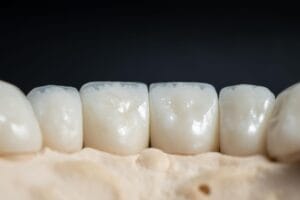
Zirconium crowns are full-coverage restorations fabricated from zirconium dioxide (zirconia), a high-performance ceramic originally developed for orthopedic and aerospace applications. In dentistry, zirconia is valued for its unique combination of:
Extremely high fracture resistance
Low thermal conductivity
Biological neutrality
Long-term structural stability
Unlike traditional porcelain-fused-to-metal crowns, zirconium crowns are metal-free, eliminating corrosion risk and minimizing gum irritation over time.
Why Zirconium Is Classified as a High-Strength Ceramic
Not all ceramics behave the same way under stress. Porcelain is brittle and excels aesthetically, but it is vulnerable to crack propagation under heavy bite forces. Zirconium, by contrast, has a crystal transformation mechanism that arrests microfractures before they spread.
This property makes zirconium particularly effective in situations where:
Chewing forces are high
Tooth structure is already weakened
Long-term load distribution is critical
In posterior regions—especially molars—zirconium’s strength is not a luxury. It is a protective requirement.
When Are Zirconium Crowns Medically Necessary?
Zirconium crowns are not the default choice for every restoration. Their medical necessity arises in specific, clinically identifiable situations.
1. Teeth With Extensive Structural Loss
Teeth that have undergone multiple fillings, recurrent decay, or fracture often lack sufficient enamel support. In these cases, weaker materials increase the risk of catastrophic failure. Zirconium crowns act as a structural shell, redistributing bite forces evenly and stabilizing the remaining tooth.
2. Root Canal–Treated Teeth
Endodontically treated teeth are more brittle due to dehydration and internal tissue loss. Zirconium crowns are frequently recommended because they reduce the risk of vertical root fracture, which can render a tooth non-restorable.
3. Patients With High Bite Force or Bruxism
In patients who clench or grind their teeth, restorative materials are exposed to chronic overload. Zirconium’s resistance to deformation and fracture makes it one of the few ceramics capable of withstanding these conditions long-term.
4. Posterior (Back Tooth) Restorations
Molars endure the highest occlusal forces in the mouth. Zirconium crowns are often medically preferred in posterior regions where aesthetic translucency is secondary to mechanical performance.
When Zirconium Is Not the Best Choice
Ethical dentistry in 2026 emphasizes material restraint. Zirconium crowns are not universally appropriate.
They may be unnecessary when:
The tooth has minimal structural damage
The restoration is located in the aesthetic zone with low bite pressure
Conservative options like inlays, onlays, or veneers can preserve more enamel
Over-engineering a restoration can require excessive tooth reduction, compromising long-term tooth vitality. The correct question is not “Is zirconium strong?”—but “Is this strength medically required?”
Advances in Zirconium Crowns by 2026
Zirconium technology has evolved significantly in recent years.
Multi-Layered Zirconia
Modern zirconium crowns now feature gradient translucency, allowing higher aesthetic integration while maintaining core strength. This reduces the need for porcelain layering, which was historically a weak point.
Improved Digital Milling Precision
Advances in CAD/CAM systems enable micron-level accuracy, resulting in:
Better marginal fit
Reduced cement failure
Lower risk of bacterial leakage
Biocompatibility Optimization
Zirconium remains one of the most biologically stable dental materials, showing minimal plaque accumulation and excellent gum tissue response compared to metal-based restorations.
Zirconium vs Other Crown Materials in 2026
| Matériel | Résistance | Esthétique | Best Use Case |
|---|---|---|---|
| Porcelain | Low–Medium | Élevé | Front teeth, low load |
| Lithium Disilicate | Medium | Very High | Premolars, cosmetic zones |
| Metal-Ceramic | Élevé | Medium | Declining use |
| Zirconium | Very High | High (modern zirconia) | Structurally compromised teeth |
This comparison highlights why zirconium crowns occupy a medical niche, not merely a cosmetic one.
Longevity and Clinical Performance
Clinical data shows zirconium crowns demonstrating excellent survival rates beyond 10–15 years when properly indicated and correctly placed. Failures are more often linked to:
Poor occlusal planning
Inadequate tooth preparation
Cementation errors
rather than material weakness.
In 2026, zirconium crowns are considered long-term structural insurance for teeth at high risk of fracture.
Patient Experience and Aftercare
From a patient perspective, zirconium crowns:
Feel thermally neutral
Do not produce metallic taste
Integrate naturally with gum tissue
Maintenance does not differ significantly from other crowns but requires:
Proper bite adjustment
Night guards for bruxism patients
Routine dental monitoring
Longevity depends as much on functional planning as on material choice.
Regulatory and Safety Perspective
Zirconium dental materials used in modern practice comply with international medical standards and are regulated by bodies such as the U.S. Food and Drug Administration and European medical device authorities. Their safety profile is well-established, with decades of clinical use across multiple medical fields.
Final Medical Perspective: Strength With Purpose
Zirconium crowns are not about excess. They are about risk control.
In 2026, the role of zirconium is clear: to protect teeth that are structurally vulnerable, functionally overloaded, or medically compromised. When selected correctly, zirconium crowns do not stand out visually or mechanically. They simply perform—quietly, reliably, and for years.
The most successful restorative outcomes are not defined by the strongest material available, but by the right material used for the right reason.
Take the Next Step With Medical Clarity
If you are considering a zirconium crown—or have been told you may need one—the most important step is proper clinical evaluation. Material choice should always be guided by tooth condition, bite forces, and long-term prognosis, not assumptions or trends.
To receive a personalized, medically grounded assessment:
Fill out the consultation form on our website to have your case reviewed by our dental team
Or contact us directly via WhatsApp for quick guidance, document sharing, and treatment planning support
Our team will help determine whether a zirconium crown is medically necessary or if a more conservative solution is better suited for your tooth.
👉 Your treatment plan should be based on precision, not guesswork.
Reach out today and get clear, professional guidance before making your decision.